
Should striped bass be declared a gamefish and closed to commercial fishing?
Some would like to see the striped bass declared a gamefish along the Atlantic Coast. Gamefish status means ending the commercial harvest while preserving the recreational catch. Another group of people—not the least of which are commercial bass fishermen—would prefer to see the fishery remain open.
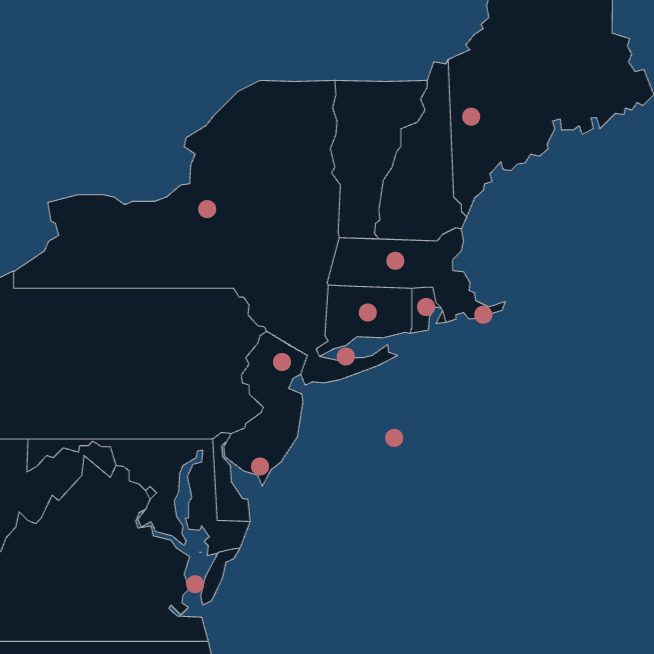
Striped bass are harvested commercially in North Carolina, Virginia, Maryland, Delaware, New York, Rhode Island and Massachusetts. The total striped bass harvest in 2011 was estimated at 3.178 million fish or 32.2 million pounds. Recreational anglers harvested about 67% of those fish (2.12 million fish, 26.3 million pounds), while commercial fishermen harvested the other 33% (1.05 million fish, 6.8 million pounds).

In Massachusetts, where the debate over gamefish status has been focused in recent years, commercial striped bass fishing is a rod-and-reel fishery. The season opens in early July and continues until the fleet reaches a pre-set target quota, which is around a million pounds per year. If they go over one year, the total gets deducted from next year’s harvest. A robust final two of days in 2012 resulted in going over the quota, and the 2013 quota was reduced accordingly, to about 900,000 pounds. By comparison, the state recreational fishermen take about 4,000,000 pounds per annum.
THE ARGUMENT FOR
Spearheading the push for gamefish status is a group called Stripers Forever. Brad Burns is president of the internet-based group, who are headquartered in Portland, Maine. He says that currently “any fish that’s commercially targeted is on the ropes,” and worries that fishing for stripers is “on its way right down the tubes.”
Burns says Stripers Forever count 17,000 members from all 50 states and some foreign countries, with the largest contingents from Massachusetts and New Jersey with about 3,000 members each.


Stripers Forever member Dean Clark of Marstons Mills, Massachusetts summed up their position in a 2010 Cape Cod Times editorial: “The only way to ensure the survival of striped bass is to take the commercial price tag off their heads and make them a gamefish.”
Stripers Forever employs a full-time Policy Coordinator named Craig Caldwell in Massachusetts to work the halls of power on Beacon Hill. They have introduced and reintroduced bills into the various state legislatures advocating the ban.
While arguing that people who catch their own fish should be granted priority over people who buy them at market, they remind us that, “This is how a free society should work.”
Instead of a commercial catch, Stripers Forever would prefer to see more emphasis placed on aquaculture, where fish can be raised in relative captivity and then brought to market. They further argue that there are economic benefits to gamefish status, whereas stopping the commercial harvest will increase opportunities for recreational fishermen, who catch far more than the commercial limits already, by providing more access to what is widely considered a billion-dollar recreational industry. They argue that “employment in these recreation-based business is usually year round and employee benefits often include health and retirement plans.”
Burns says that he’s from a fishing family, both in Friendship, Maine, where he grew up, and in New Bedford, where his grandfather was dragging Georges Bank for scallops as early as the 1930s. Burns views Stripers Forever as “the keepers of the flame of for striped bass conservation,” and cites tarpon and marlin as examples of successful implementation of gamefish status.
“The recreational fishery is constrained by size and bag limits,” says Burns. “And those will not automatically change just because the commercial fishery closes. Stripers Forever’s members have repeatedly said in our annual survey that they want the fish saved by ending the commercial fishery to go to conservation instead of increased [recreational] bag limits. We need both to end commercial fishing for striped bass and significantly reduce the recreational catch.”
Stripers Forever believe that the commercial harvest is given preferential treatment by the Atlantic States Marine Fisheries Council (ASMFC), a federally mandated group. The ASMFC was established by an act of Congress in 1942. Each of the 15 coastal states sends three representatives—one each of whomever is head of the state agency in charge of conservation of fisheries resources, a member of the state legislature, and a citizen with fishery knowledge to be appointed by the governor—and each state gets one vote.
Stripers Forever disagree with the current ASMFC council findings that the striped bass stock is relatively healthy, and argue instead that the group is more concerned with, and overly influenced by, powerful commercial interests.
The fight over the striped bass stretches over the decades. Dick Russell wrote a book about these struggles called Striper Wars in which he recounts the fight to bring back the striper from the brink of collapse in the early 80s.
Reasons for the 80s collapse range from those who see it purely as overfishing to a more nuanced approach that includes fishing pressure, environmental pollution, normal cyclical stock fluctuations and spawning habitat degradation. No one disagrees that the comeback of the striped bass has been a smashing success.
While Russell is not a Stripers Forever member, he says “I respect their work,” and he agrees that more needs to be done to protect stripers. To this end, he advocates the use of circle hooks and more conscientious catch and release techniques.
THE ARGUMENT AGAINST
Darren Saletta is president of the Massachusetts Commercial Striped Bass Association and says that the Stripers Forever efforts are “short sighted and irresponsible.”
Saletta says the ASMFC “has done an excellent job of managing the fishery in the past three decades and should be commended for successful management.” This management includes “triggers” which mandate management action. Saletta says that despite a downturn in biomass that the preemptive triggers are still not close to be being reached.

He derides the Stripers Forever position as an allocation grab, saying that their position “is about allocation, not conservation.”
Patrick Paquette of Massachusetts Striped Bass Association concurs. “This is really an allocation debate. Gamefish status [for striper] is really not about conservation.”
Paquette also takes exception to the Stripers Forever position of bringing the fight to the legislature. Paquette admits that steps need to be taken to protect and preserve the striped bass population, but would prefer to see any debate “happen publicly, and happen through fisheries management. Asking the legislature to regulate fishing doesn’t really make sense.” The MSBA position is that they’d prefer to focus on forage management and look at the whole ecosystem.
By the numbers, there are about 4,000 commercial striped bass fishermen in Massachusetts. (The permits, which cost $30 for residents and $60 for non-residents, are available to anyone who asks for one.)

But this number is misleading. Of those 4,000 Massachusetts commercial striped bass permit holders, only about 1,200 sell even one fish in a given year. And a mere handful of individuals—35 fishermen—each landed over 5,000 pounds in the most recent year measured. Saletta estimates that 75% of the quota is landed statewide by about 250 guys.
And even among this robust 250 guys, few if any of them earn their annual income from striped bass fishing alone. After all, the fishery is only open until the quota is reached, and that is often less than 20 days. Last year it was a mere 14 days. Unless you’re a pro football player, you can’t make a living working that many days a year.
The way it was set up, the striped bass commercial fishery was never intended to be a full time thing. “It’s not a place to go for a misplaced [commercial] groundfisherman,” says Paquette.
Consequently, the striped bass fishery is considered a gateway fishery, a stepping off point for commercial fishermen who likely hold several endorsements on their license as placeholders. Many of these same guys either sportfish as charter boat captains on the side (or, more accurately, fish commercially on the side while running a charter business) and then dig clams or scratch bait to round out their income in the off-season.
State representative Sarah Peake, D-Provincetown, has stated that “These guys are geniuses at being able to figure out how they can piece together enough to earn a living. This little bit of commercial bass that they can catch during the summer months is a make-or-break piece for them.”
An exemplar of this breed is Bruce Peters of Chatham. He has fished stripers commercially since 1990, runs Cape Shore Charters off the Chatham Fish Pier and says that gamefish status, “Wouldn’t hurt me financially, but it would take away a freedom I grew up with.”
It is something Peters feels strongly about. “Striped bass belong to every single member of the Commonwealth. The commercial guy is a tool that gets that [resource] to market,” and that taking that away is only “taking it away from the little old lady,” who wants to buy striper at a restaurant or fish market.
Curiously, it is this proverbial little old lady that each of the opposing groups site as their target audience. Both groups claim the popular mantle and they speak for the people.
Both also deride the middle-of-the-pack fisherman who fill out the ranks of the commercial bass fleet—the majority of the 4,000 permit holders, in other words.
Stripers Forever derides these “pin fishermen” who only catch bass commercially to subsidize their other recreational fishing. Peters too has some harsh words for a group he derides as, “Little nimrod college kids who live in their mother’s basement,” who fish more out of interest in writing off their expensive Whalers, trailers and fuel for the year. The pro- and anti-gamefish crowd are in agreement on very little, but both agree that these middling fishermen drive down prices by glutting the market in what is already a short season and both acknowledge that a lot of gray-market and black-market sales muddy a clear assessment of landings numbers.
Saletta bristles at the way the gamefish argument is often oversimplified as being a commercial versus recreational argument. “I’m a recreational fisherman!” he states, citing Monomoy Sportfishing, his charter fishing business that operates when commercial season is not on. Saletta has a vested interest in a sustainable striped bass fishery with an abundance of fish in the water, and has supported water quality issues and striped bass forage fish issues. In December, he traveled to an ASMFC meeting in Baltimore, Maryland to support an historic reduction in the commercial harvest of menhaden, a species considered integral to the diet of the stripers.
“The gamefish argument is about allocation, not conservation,” says Saletta. “This is a public resource, with [commercial fishermen] bringing fish to people who don’t fish.”
Give striped bass game fish as opposed to commercial status ? Let’s stack the argument (in my humble yet unbiased opinion) for and against shall we:
For game fish status:
1.) Protection of the species from commercial overfishing, illegal high-grading and poaching
2.) Protection of the public from consuming a fish high in PCB’s, dioxins and various other. potential dangerous and carcinogenic contaminants and neurological pollutants.
3.) Eliminating perishable waste of harvested striped bass (recently saw fillets for sale at $17.99 lb at a local fish market on the Vineyard; who the hell is paying that?!).
4.) Helping ensure and maintaining a broad stock and class of fish to benefit the future survival and thriving of the species.
5.) Financially supporting the local recreational fishing sector (charter boats, bait & tackle shops, sporting good stores, and various other local businesses), as well as preserving the fishery for future generations of younger fisherman to enjoy.
6.) Etc., etc., etc…
For commercial status
1.) Lining the pockets of commercial fisherman and nothing else.
I don’t know, seems like a logical choice to me, but if someone has a counter argument to the above I’m all ears.
Couldn’t agree more, Derrick!
I live in Chesapeake va .I am a true avid fisherman I recreational fish for tuna dolphin and Wahoo during summer and in winter months I fish for strip bass .Now that’s been commercialized there are no bass to be caught .The state sent me a letter on this matter when it was going public for commercial fishing for stripper and I said it would desimate the fishery and it happened here in Chesapeake bay . This is a highly migitory fish that follows menhadden fish now why go after menhadden when u sell striped bass for more .here in Virginia the stripper fishing is no more
Derrick-
I live on the Vineyard. Bass fillets for $17.99 per lb is cheap. Vineyard prices for just about anything- (fish fillets and other products and whether summer or off season) are always surprising to people who don’t live here. I also seriously doubt any of that $17.99 per lb bass is going to waste. If it was one of the local fish markets then I am sure an enmployee or the owner gets to take it home at the end of the day. And if you saw it at the only chainstore supermarket– well sorry in my personal opinion no one should be buying fish from a supermarket at any time of the year anywhere. If you have worked in one you would know what I mean.
In my opinion, I feel that the striped bass should just be put into the endangered category and left there. No one gets to fish it -commercial or recreational.
I would suggest that we all google Sylvia Earle and absorb some wisdom from her viewpoint.
Eyelean: Perhaps you’re right, perhaps the striped bass fillets sold don’t go to waste, even at double that price. But be that as it may, whether striped bass is sold cheaper at a supermarket chain store or pricier over at a local Vineyard fish market, can we as a collective whole justify the sale of this fish? That is the larger question, and I say “no”, and you seem to agree given you sentiment that stripers should be put in the endangered species category (though thankfully that’s a bit overkill, as the species isn’t nearly that threatened and probably will never be).
Anyway you look at it, I’d rather eat fresh haddock, at less than 1/2 that price, and avoid consuming a fish that is extremely overpriced and notorious for the documented level of contamination, thank you very much.
Derrick-
I don’t see my comment here- I sent it on July 29, 2016.
I happen to be female and fish–don’t see too many comments from women here.
What gives?
You have some good points for recreational, but I think you give short shrift to commercial. There’s a strong argument that by harvesting and consuming fish locally, which happens to most of the striped bass consumed, we are forced to pay more attention to water quality issues, dwindling stocks, etc. By keeping a more diverse set of players invested in the striped bass, we’re more likely to have advocates in Congress, in fisheries management, and on the water who want the same things that we do.
Make it a gamefish and make keeper size bigger. We need to protect this resource for all future generations.
Here in Connecticut we have already instituted a commercial ban on striper fishing after the Blue Back Herring population in our rivers was almost extinct which in turn destroyed our bass populations. Speaking from first hand experience I can tell you it’s done absolute wonders in our state with completely revitalizing our Striped Bass population as it is finally now a sustainable fishery! I also know that the commercial harvesting of bass in MA & RI has a direct effect on all of the northeaster fisheries since the bass are migratory and dwindling populations in our neighboring states bass fisheries will effect all of the states that they migrate through. I’m all for game fish status.
Classifying Striped Bass to a Gamefish status would be a great start for RI and MA, but I think implementing conservative size limits and bag size would undoubtedly also improve the stock. This was a great article, but did not really touch on size limits and bag size, which in my amateur opinion -are directly related to the commercial quota vs recreational harvest. Like Deer hunting, what if commercial and recreational tags were sold for a certain size range/slot limit? Say, 32 to 38 inches? Just a thought!
“Gamefish are too valuable to only be caught once” – Lee Wulff
Good points and suggestions Ben.
It brings back to mind a same slot size implementation that I recommended from years back, during a Mass Striped Bass Association meeting in Braintree, where I prompted pretty much the same question, as I have always though slot limits (like those used in Florida to protect game fish) where ideal for this fishery, from both a sportsman and commercial standpoint. But I was given dismissive looks on both fronts by both groups (there were two guys who fished stripers commercially there too).
Here is the issue with slot limits, which are designed to protect the larger “breeder” portion of a stock: The commercial guys would be limited to (perhaps) a much smaller percentage of the total stock in terms of size, making it harder to fill tags, and most sportsman members want to land and mount a cow over 50+ lbs for bragging rights (of course, very few come out and openly say this, unless they are forced to by asking the question directly, but every member wants to join that trophy club; it’s almost a form of validation).
Just as an example, with slot limits, a sportsman may be allowed to keep one 18″-24″ fish, and another if it’s between 36″-48″. Therefore, anything over and under those slot limit measurements would have to go back, without exception. Now, someone who just wants a fish to take home would be happy with that as it allows them to take a smaller and safer to eat fish home (not to mention easier to catch fish), but trophy chasers would be bummed to let the 57″ bass go due to the slot limit, especially if it’s gut hooked. But those would be the breaks.
From a conservation angle, if the slot limits are set scientifically correct, the system would work. The challenge is appeasing both groups, that’s the real battle.
why would you want to take a striper that small, even at 3o inches theres not a lot of meat on it, if you wanted a slot make it 32 to 40 or so, then you taking for food not tidbits
hduplease, two things:
One, if you were to take and fillet an average 28″ fish, and then fillet an average 32″ bass (hypothetically speaking, respectively), and get a similar yield out of each side of both fish, you would see that there is not that much difference in either of the four fillets. This is because as a fish gets longer, it does not proportionately give a greater linear amount of greater edible flesh meat (though admittedly, there are some out liar specimens that will significantly vary in weight and thickness, and will have more fillets meat by comparison, though not that much more). So the difference in the amount of meat between similar size ranges is not as much as most would believe.
Secondly, a small 18″ fish can be cooked and eaten whole, which to me would taste much better (if I were to eat a bass), thus utilizing more of the overall edible meat present of a single specimen. And since younger fish aren’t as “gamey”, and likewise don’t have nearly the amount of red streaks in the meat (that most fillet out when preparing the fish), the amount of scrap is less as well.
Oh, and the contamination level in said smallest fish is also far less, which is kind of important if one values their potential long term health.
YES. YES. YES. YES. YES.
While I am an avid fisherman and might carry a biased view from a “sport-minded” view. Please look at the history and fluctuation of the species from the early 50’s until the early 90’s. Simple research indicates that this species was once diminished at a rate that would have wiped the species off of the planet – had we not enforced a more stringent limit and enforcement within the northeast. There is no reason commercial fisherman need to target this species. There is “plenty of fish in the sea” and I for one can live without going to a restaurant for a striped bass meal – let alone preparing one for myself off of my own catch.
Game fish yes,not good eating anyway.
Great, quotes from trout and tarpon fly fisherman, plenty of other fish in the sea, and decimation of blueback herring wtf are you guys talking about. A sustainable fishing method such as hook and line should be wiped out because of stupidity such as “Plenty of other fish in the sea” to fish for? What else can they fish, cod after the Regulators allowed the GOM to be dragged clean by big business. Should they fish for species you find less entitled to? Quota system works well, fills up roughly the same time every year. This isn’t the 60s or 70s where every fisherman rec and commercial kept as many fish as their boat would allow before sinking. Striped Bass is a piece of the puzzle that charter captains, lobstermen, and other blue collar watermen rely on in the summer. If bass season runs into October then there’s a real problem, until then step up your game if you are struggling catching striped bass but don’t blame others for your lack of success. As long as EEZ is enforced and their forge is protected bass will be just fine relax.
I think the slot limit idea is insane, lets kill the fish before they get a chance to spawn. Read the history of managment during the 1980’s through now. They made the size limit large enough to allow the femail fish to spawn before they could be killed. “minimum size limits scheduled to reach 38 inches in total length by 1990.” That is right off mass.gov. It worked before, why wouldnt it work again.
reference: http://www.mass.gov/eea/agencies/dfg/dmf/recreational-fishing/species-profiles-striped-bass.html
Spencer, I beg to differ because it’s not insane, respectfully. You can’t always go by what’s worked in the past; dynamics change with regard to a fishery; the history management program and implementation measures for stripers that you are referring to is over several decades old, even obsolete in some respects. And there is a night and day difference, in terms of management, between saving a fishery on the brink of near extinction and trying to beef up and further build on a fishery in an already relatively health status. Simply put, the striped bass discussion now, as it relates to fishery conservation, is therefore much different now than it was back in 1980.
Since the prime purpose of the slot limit is precisely to protect the larger portion of the breeder stock, it’s the best management policy for this fishery, in my opinion. Hence, if that portion of breeder fish is, say, determined to be fish between 28″-36″ (arbitrarily speaking, of course), and that group of fish constitutes 33% of the population, then it’s only practical to protect it for future stock procreation. Doesn’t that make perfect sense to everyone here?
And let’s remember that slot limits can (and in many cases should) be adjusted, even annually, to account for rejuvenated stock protection, especially as it related to protection of the most fertile portion of said fishery.
Also, that management plan from the 80’s worked because there were few bass left period; setting the limit at 36″ one fish per day worked beautifully because finding a fish near three feat was quite the task during that area (at least in MA waters) as compared to now. Today, by contrast, you have a population of stripers whose sizes (based on geographical location of where the biomass study is conducted) is all over the place. Assuming management and stock assessment is remotely accurate, how many bass out of the overall population are over 30″? What about 28″? Over 48″?
Hard to say, but once we establish a rough baseline of where it stands, from a total population standpoint, then a slot limit would do the job quite nicely because it takes those various existing groups of fish in that size range into consideration for conservation measures.
And if spawning fish mortality is a big part of the equation, then you either shut it down during the spawning period or regulate it to catch and release only.
I understand what you are saying, and not disagreeing that a slot limit would work, but who wants to take a charter for a 28 inch striper? I know when I have fished block island for big stripers I try and release anything I catch that swims away, but even so with 3 guys on the boat we still end up with a fish or two that are dead after the fight. I have seen the decline and I remeber when the whole cape was surrounded by stripers, I caught big fish all the way around it from the elizabeths to chatham to the south shore. It sucks now, I drive from falmouth to block, or ptown, where ever the fish are and something needs to change with out killing the guys making money by fishing.
Also, the world record was broken, tons of fish in the 70lb, 60lb, 50lb fish have been caught and the fishery was absolutly insane in the early part of this century, coming from the conservation days of the late 80’s and 90’s. The fish havent changed, the spawning hasnt changed, the rules have changed. Also New York has a hudson river striper fishery, those are spawning fish, no one if going after that fishery. I enjoy fishing for big stripers and personaly dont like seeing them float away because I am not aloud to keep it. One of the 70lb fish caught in ct was released, the guy that caught it said it floated could revive it, ended up mounted on his wall, wouldnt it be a shame to see every ones trophy fish floating dead rather then taken home for feast and celebration.
http://www.onthewater.com/spring-run-stripers-hudson-river/
I had the same experience (over three years ago) catching larger fish with no problem in pretty much the same areas you fished down the Cape as well, and we had no shortage of large numbers either. My charter captain and good friend would always hit the right tide for numerous fish from 32″-38″ (or substantially larger); it was nothing to catch over thirty fish in under a hour of fishing with a six man charter. But I feel a larger problem to that region now is the lack of bait; pogies have been essentially wiped out by seiners down south, and they are not around there in the numbers requires to trigger that bite like it was several years ago. That’s the biggest difference I see there now.
Likewise, umbrella rigs that used to virtually guarantee some degree of sizable fish in the past, in certain money spots within that vicinity, also failed to produce with regularity in the past three years, because the fish just aren’t there like they used to be when there was ample bait to feed on.
Something has to be done, that much is for sure, and game fish status is a step in the right direction. Maybe it’s a minimum size limit or the slot limit that greatly helps also, but we need to look at more data to figure out which is best, as I’m all for whatever we need to do to keep the fishery thriving.
Either way, I wouldn’t mind chartering to catch larger fish, for catch and release purposes, but a smaller fish (if I keep one at all) is always better suited for the table.
If we do utilize a slot limit in the future, or even if we stick with the existing minimum size requirements, anything over 48″ should be fair game as a keeper as those 50+, 60+ lb – 70+ lb fish you referenced are freaks anyway that are probably at the end of their life span regardless.
Concur. Raise the limit to 36.
Slot limits increase mortality, that is a long held scientific fact. Slot limits do not work the way most people think they do. A simple google search will reveal many papers on the subject.
Maybe or maybe not Patrick. However, and according to the link (below), a slot limit seems to work very well for redfish, and it’s a good prototype fish for drawing parallels with the striped bass fishery:
http://myfwc.com/fishing/saltwater/recreational/red-drum/
And here is another species example from the state of Florida regulations homepage:
http://myfwc.com/fishing/saltwater/recreational/snook/
True Gamefish status means no harvest. I wonder if those that want to take the commercial price tag off of striped bass also agree to have a no harvest 100% catch and release fishery. I would love to see a true coastwide ASMFC debate on the merits of having Striped Bass as a 100% recreational fish with personal harvest allowed however for some reason all the “organizations” that want to “take the commercial price tag off striped bass” refuse to make their case via the management process. Why is that?
I’m confused Patrick; in the online version of OTW, dated June 13, 2013, you wrote the following on game fish classification (as it pertained to stripers, respectively):
“When it refers to striped bass, “gamefish status” means a recreational-only fishery with no commercial sales of any kind. The central philosophy of this management tool is a determination that the economic value of striped bass as a sportfish so far outweighs its commercial value that allowing the non-fishing public access to this food source via commercial sales should be prohibited.”
So does this mean that recreational fishermen may be allowed an allocated portion of the fishery for consumption, so long as it’s strictly for personal use only and there is no sale of a kept fish? That’s what this passage seems to say if I understand it correctly. (Maybe I misunderstand the whole game fish vs. true game fish question, however. If so please clarify.)
So unless I misunderstood that passage, it would designate the striped bass as strictly a non-commercial and recreational fish, not a “no harvest” fish for sport fishermen. Likewise, I have not found anywhere else on the web where game fish status = no harvest for recreational fisherman, though special permits/tags, tighter and stricter seasonal closures and geographic restrictions are usually a rule of thumb for such species. For example, in FL you may keep a tarpon (though don’t ask me why you’d want to), provided you buy a special permit to do so recreational, along with a fishing license, and abide by the published seasonal and size restrictions.
One thing’s for sure, way too many stripers are killed for food. They’re too high on the food chain, and therefore too low in biomass/number, to be eaten like herring or mackerel. It’s unfortunate that the current size minimums mean keeping one fish for the table (or the market) means killing a fairly old, reproductively mature, fairly large fish that will often go to waste, especially on the recreational angler’s table. I have to assume not every angler keeping 30-inch fish is eating all of those fillets. I’ve never eaten one of those 40 pounders but I’m sure many of those are wasted and my gosh that’s a sorry use of a rare specimen. Prices for commercial meat probably will always be high, even if it’s bland and full of pollutants. Everybody under the Sun should be aware of the waste and harm that results from eating any of these fish.
Whatever the effort, the result needs to be fewer fish being wasted. Recreational guys need to do their part. Eat mussels. Show off with a release photo on Facebook (or this website), not in your garage with a dead breeder that your cat eats for weeks. Decision makers have to stop letting the “dying way of life” commercial argument be so influential, especially for the striper “fishery.” There’s always somebody with a love for the sea and a dollar incentive who will tell that sad tale, but this isn’t Gloucester codding in the 30s. Pay me well to throw a frisbee on the beach in July and I’d complain if you took that job away, too. Don’t listen.
Sam. The problem is not the commercial fisherman crying on the screen that fishing is all he knows how to do, it’s been in his family for ten generations, it’s what his daddy did back in the day, yada yada, blah blah. That is nothing more than a widely used publicity promo specifically created for a political candidate running for office. The bigger and real culprit, in almost all cases, is the direct involvement of the local (and even federal) government itself; that is what squanders a fishery and causes over harvesting and conservation issues.
As a great example, you need to look no further than the present black sea bass regulations here in MA. Three years ago the legal bag limit was 20 fish per person, then the following year it got reduces to 8 fish per person (supposedly due to accidentally exceeding the quota from the year before), and now it’s 5 fish per person. This despite the fact and general consensus that the biomass of this species is in excellent condition, there are more black sea bass now than in over a decade, and that Buzzards Bay alone was practically choked with fish the past two seasons. Yet there was a reduction in the recreational bag limit for this fish this year, and it puzzled many (including myself) why such a stricter restriction was put into play, when the fishery is thriving and doing much better than expected.
Well, the answer becomes quite obvious when look at fishery management, who is running it, and the direct involvement of the government in the commercial fisheries sector itself.
In this case, a significantly higher percentage of the quota was allocated this season to the commercial sector, so that instead of say a 50% percentage of the established annual quota being allocated for the recreational sector, and an equal 50% for the commercial sector, the commercial sector was given close to 90% of the quota, thus leaving only 10% for the recreational angler!
Why? Simple. If commercial fishermen catch more fish, they sell more fish, thus creating greater taxable revenue. See where this is going? And once the government receives their take of the haul, via the taxable income generated by those commercial fishermen, they want at least that much next year. Probably more.
This is the real problem we need to address, and it’s just another example of why having ay portion of the government involved in such matters (with such a personal stake in the legislation, with regard to pertaining fishery regulations) is not just a bad idea, but likewise virtually ensures that the fishery is destined to be screwed up at some point.
In all due to fairness, recreational striped bass season should run parallel to commercial. Recreational season should open when commercial season opens. Once the commercial quota is reached, the recreational season should close also. Until the biomass research improves, we can lift the restrictions. Research shows that the recreational harvest is greater than the commercial harvest. Also fish mortality for the released fish is high under recreational gear. I.E the use of lighter line and tackle will wear the life out of a 40 pounder.
I mean recreational fisherman can fish for “other fish too”. Like bluefish, dogfish, fluke, sea robin…etc
Think about it….. ALL commercial fishermen are basically farmers that dont have to pay to:
1. Buy their livestock
2. Raise and feed them
They just go into the ocean, catch what is allowed by law (mostly) and reap the rewards$$$.
The numbers 67 rec and 33 comm are not counting all the bicatch bass that drown in nets or get imporoperly released and do not survive. I think a bucatch allowance, but a ban on targeting bass would be a better way to preserve the fishery. If these fish are dying at the hands of men, wouldn’t it be more responsible to eat the bucatch then release it dead?
I know this might not be well received here but what about regulating rec fisherman similar to commercial bass fisherman? With your fishing license you are alloted a certain number of fish of a certain size and given tamper proof tags like what you see in commercial caught fish.
I grew up poor in Warren, R.I. I am 65 years old. Local fisherman were kind enough to drop off several Stripers every Friday when I was a kid (good Catholic). My mom would stuff and bake them, and, to this day, I have never tasted better. I will forever be grateful for the recreational fisherman who helped us stay fed, and, who eventually taught me how and where to fish for these awesome creatures. That was the 50’s / 60’s. Fast forward to the state of the fishery as it stands today. Through measures that have affected baitfish harvest, number one, and commercial/recreational harvest of Stripers we have been able to overcome the crash of the population of the 80’s / 90’s. So, he we are in 2016. Stocks are better. We have had an above average year on the Vineyard for Stripers. Lots of fish in all age brackets. All good, right ? Well, maybe.
We have seen how resilient the baitfish and Striper stocks have been to the regs. Think of how great the fishery would become if we did more. Take a look at what the South did with Redfish. Our southern friends, who are sometimes unfairly thought to be slow learners, figured out in the 80’s that Redfish, on the verge of a greater collapse than our Striper, were worth much much more as gamefish. The results of every southern state’s elevating Redfish to “gamefish” status has resulted in an economic Sports Fishery behemoth.
I have the greatest respect for the commercial fisherman. I knew them as a kid and know some of them now. Slamming the door on them is not the way to get to the goal we all aspire to. But, let’s face it, most of the permits issued are to people who are not dependent upon the fishery to put food on the table. In fact, most who acquire permits do so to cheat all the rest us by taking the write-offs that allow them to keep their boats in the water at a discount.
Food for thought: Raise the permit fee to a lot more than it is – pick a number – but much higher than now. Something that one would have to think twice about before acquiring. For the men and women who truly depend upon the fishery, yes, an unfair burden, at least initially. But, with the reduced number of permits, comes a better opportunity for a better market condition for them – fewer competitors for the commercial fish, potentially higher prices, and a longer season. Couple this with a smarter recreational slot / harvest reg and you have the beginnings of sensible, sustainable plan. Not a plan to maintain the status quo, but a plan to make the fishery much greater. Eventually, for those commercial permit holders who can prove what they have been harvesting, a buyout over time is not unworkable. We’ll figure that out as we get along with the Plan. As for the argument of the little old lady’s being denied her annual Striper dinner, let’s face it it’s BS. If she wants a striper filet, in this age of instant communication, we’ll figure out a way to appease her. Baby steps – but steps that must be taken sooner rather than later.
Agreed! You haven’t lived until you have had a homemade fried fishermans platter made with fresh skate wings, sculpin tails and choggie fillets. Mmmmmm…taste the variety! 🙂
I was a commercial striper fisherman and now a charter captain but unfortunately we have idiots running our fisheries! Bass have been declining for the last three or four years now because the spawning of striper has been declining. If you go back to the year class that would make up legal size for striped bass you would see they are very low. Unfortunately the people running our fishery have not taken that into consideration when setting commercial quotas. They cut recreational fisherman back but commercial? Hell no! Commercial guys are still making their money but charters are suffering, people don’t want to pay to go catch a single fish, I’m for making striper a game fish, the argument that people should be able to buy striper is ridiculous. Not many people are willing to pay $15 to $18 dollars a pound for it.
I think the only way to restore the striper fishery is to eliminate commercial harvesting and have catch and release for recreational fishermen!
I opposed game fish status for stripers when first offered years ago as state-by-state legislation for Rhode Island. Our huge fisheries management issues require close cooperation between commercial and recreational interests. Game fish status would rip that apart. A fair path for the East Coast’s most popular species is equal access for both sides – which then can cooperate on conservation issues. We are all in love with this fish, so focus on its life-cycle: it is born in the Chesapeake and nurtured through early years by juvenile menhaden—also born there. Sadly, 85%-95% of juvenile Chesapeake menhaden are harvested by one company – forcing hungry bass to forage for crabs. Striper lovers should apply their resources against that outrageous regulatory threat rather than squabble about who fishes for them. When game fish supporters understand the responsibilities of regulatory agencies they will realize that a “victory” would force them to accept as much deprivation as the commercials. There are no ‘knockouts’ in environmental competitions – only painful downward adjustments for all contenders.
Spot on Will! The bait fish play a huge role in the striped bass population. If the menhaden, bunker, pogies continue to be decimated, then the same will happen to the striper.
Agree that gamefish status and slot limits would be appropriate at this point, to allow more fish to get to peak spawning potential. There has been a steady decline in the number of fish over 20 lbs in all the south shore and cape cod sites which I fish, and any doubters should take a look at the data for the Martha’s Vineyard Derby over thelast 60 years, posted on their website. Gamefish status and slot limits have been very successful in restoring the redfish and snook fisheries in Florida, and our striped bass deserve the same level of support. We were fortunate to have one good spawning year in 2011 but not much to cheer about since then…
Did you guys read the article, it spells it out pretty clearly that the recreational fisherman take more stripers at 67%, where the commercial fishermen catch 33% of the fish each year. I’m all for conservation and it looks like it would be much more beneficial to wipe out recreational fishing for stripers. Commercial fishing not only provides food for the public, it gives the ability for multiple people to make money off of the fish, like the fisherman, the middle man and the restaurant. Strict limits and regulations have been set in each state and if followed should let these fish come back like they have been each year since I’ve been fishing for them. I commercial fish year round and each year for 3 to 4 weeks I catch stripers, and each year they have been coming back bigger and in more numbers. Recreational fisherman should look in the mirror and relize that there are a lot more of you out there that do a lot more damage then guys who make a living off of the ocean providing for their families. To take away a commercial fishery for the sake of fun and sport is not the answer. It will negatively impact my livelihood and that of other fishermen who depend on catching these fish each year, not only for themselves, but their families. It may seem recreational guys have a hard time catching stripers, but I bet they could catch if they depended on the money they make off of them.
In my opinion, those with commercial licenses should be allowed to continue or be bought out BUT under no circumstances should new licenses be issued. Recreational fishing for striped bass and other high value (economic, ecosystem) should be allowed using a tag system which does not prevent keeping fish BUT creates a funding mechanism for enforcement. This is what Florida and the Northwest states do for sensitive species and it works well. If you want to kill fish, you buy a tag and you pay a modest fee. The current system for bass is hodgepodge and the poaching and lack of enforcement for recs and coms is one reason this fish continues to suffer. I also agree a slot limit that allows the breeding backbone of these fish to constantly replenish the pipeline is critical. We live with a fishing experience that is shadow of what it was and what it could be. We are long lived but we lack memory and will to protect these great fish for ourselves and our children. Change is inevitable. Traditions go away. Just ask native Americans.
Striped bass are more lucrative on the recreational end than the commercial end. There’s the chartering business, tackle shops, striped bass lures and gear and the ridiculous amount money a recreational fisherman will spend. With all the lobbying that goes around with Rhode Island politics, they’re only a briefcase of cash away from making a decision.
67 percent recs kill twice as much as commercial don’t consider warm water release fish don’t survive.
Just my personal opinion is that there is pros and cons of putting the bass into the game fish category, the striped bass would Have a huge comeback and more bigger fish would be caught but the income that commercial striped bass would be gone. So as a local fly angler I would like to see the the striped bass to become a game fish
This has been a great thread thus far, with lots of great points and feedback from everyone, and since I rarely get this kind of time to voice my opinion, and partake on a subject that I also feel very passionate about, I’d like us all to ponder yet another aspect of striped bass management:
Let’s say that, under the best case circumstances, the proper management and regulations are put in place and that the striper fishery explodes over the next five to ten years to historically successful levels…the best it can get, in other words, which lots of various size and class fish for everyone to enjoy, plus plenty of “cows” for the chasing. What kind of impact would this have on other fish living in the striper’s habitat?
These fish are ravenous feeders, and much has been documented on the various “surprising” contents of their stomach, anything ranging from several pound lobsters, to entire skates, to who knows what else. I’ve heard many local sport fishermen swear over the years that their favorite live bait was a baby dogfish or scup, a live sea robin or northern croaker – species they believed were the ticket to the “big one”, and live baits that they have had success with over the years. It’s an interesting dialogue because my conversations with them seem to illustrate that bass can and will chase and eat just about anything they can swallow, depending on their mood. So then what does this do to the local populations of other fish like scup, flounder and juvenile black sea bass?
The pogie populations are not what they used to be here in MA, and from what I hear the same can be said elsewhere, and the use of these feed fish in medicine now will make them even more sought after going forward. Since bunker was and is a primary source of forage food for stripers (and other fish), and since herring populations also have a long way to go for recovery, that pretty much leaves just mackerel and any other unfortunate fish (whiting, baby pollock, etc.) that swims the only prime specials on the menu.
So as a whole, how will that impact the entire marine ecosystem going forward?
They also feed on sandeels which they will hunt pass the 3 mile nautical line.
How does anyone know the number or percentage of stripers taken by recreational fisherman such as me? I caught three keepers this year, so far. Probably released 100 under 28″. I haven’t reported that to anyone. I doubt the charter guys do. So where is that stat coming from? Maybe I missed something.
game fish status, complete no brainer, well said Derrick, many, many reasons to do so, not to mention that a game fish with a sustainable, healthy fish population is far, far more valuable to all affected regions than a commercial harvest. Just look at the example in florida with snook and redfish which have game fish status, are enjoyed by millions and produce billions in annual revenue for the state. there should also be far stricter regulations on recreational harvest with protection of the breeder stocks, much more so than is done today. the catch and release efforts of the On the Water Striper Cup is a good effort in this direction, however, far too many large bass are killed for ‘glory’ shots and entering into contests such as the Striper Cup. CPR – catch, photo, and release is the only way for a true sportsman in 2016. A conservative limit of smaller fish for the table while completely eliminating the commercial harvest. The Striped Bass is arguable the single most important saltwater fish in the United States and it needs protection, this is long over due.
Professor Higgins: Glad you concur, and ditto on your observation concerning the healthy FL redfish and snook (game fish status) biomass comments; it seems that we should look at Florida for a lot of pointers on how we should be managing our own commercial and recreational fisheries.
And at the risk of full disclosure, even I’m not a scientist or marine biologist (though quite informed and fairly well read on the subject), I simply don’t see why a similar management program, maybe through the use of slot limits, open closed seasons, geographic restrictions, etc., wouldn’t work for striped bass as well. It’s a strong selling point at least.
Note: Similarly, and just the other day, I had a similar argument with a relative and fellow fisherman concerning the annual (Oak Bluffs or Newport now, not sure which one any more) Monster Shark Tournament, which seems to produce less impressive “monsters” each following year. My direct question was, “Why are we still doing this? Hasn’t this kill shark tournament mindset hit it’s expiration date yet? This type of activity is very much out dated; we know so much about sharks and shark populations now to prohibit the senseless killing of sharks for awards, prizes and photo ops. Every thresher, porbeagle and mako shark killed (including perhaps rarer sharks) is a geometric loss, and this should strictly be a catch, tag and release tournament.”
But fishermen, and yes even recreational ones, can be a stubborn bunch. In the years that I’ve voiced this exact opinion, I’ve got more jeers than cheers from participating fishermen. And even though (theoretically at least) the shark meat goes to a shelter/food pantry, is that still a good use for such a vital and threatened resource?
Again, look to Florida: Catch and release tournaments, where you even get extra points for hook removal at the boat vs. cutting the leader. You catch them, support the scientific community assigned to protect them (via tagging, measuring and proving data on the species caught) and let it swim off to be caught and further studied another day. Smart resource management all around.
What about a slot limit at least? The larger females produce exponentially more eggs than fish around 30″ . I don’t get it when guys keep fish in the mid 40s and up. Those are the big mama breeders. If you’re savvy enough to catch in that class you can certainly find smaller keepers.
A slot seems to work for snook and redfish to some extent. A slot for both commercial and recreational should certainly be considered. If nobody is keeping the big mamas except a few slimy poachers that can only help – and if there’s a universal slot it limits where the poachers can sell.
Proven smaller fish lay more eggs big fish past their prime. Fact. 2/3 of bass to recs is not fair.
True Buck, smaller fish lay more eggs, and that’s usually because there are far more smaller fish than larger fish doing the egg laying. However, if during a biomass study it is revealed that the largest class of fish alive are in fact mature breeders (not that this is the case for stripers now, just painting an example), then that is the size range fish that is yielding the highest volume of fish eggs and younger juveniles for future stock replenishment.
Thus, that is the purpose of slot limits, namely to protect the larger portion of the fish stock that is producing the largest amount of future fish, and adjusting the slot limit sizes periodically and accordingly as the classes of fish within that species change over time. So in the future, for example, if younger fish constitute the larger bulk of the fish population, then the slot limits likewise shift to protect that specific portion and class of the fish biomass.
The fact that it is a rod and reel fishery makes a big difference to me. Dragging the bottom and surrounding entire schools of fish in a giant net is what does the most damage in my book. Let the commercial guys have their share. But I agree the size limit should be increased and made a slot limit. Maine has it right. Free the big breeders… They are not as tasty anyway…..
Lets face it the two sides will never see eye to eye. Being a full time commercial fisherman I dont have to explain whos side I am on. The recreational season is like 7 months and there are 1,000s more of you guys than us. You guys are the ones taking trophy fish for photos and those not as fishing savy release them back to die more often than they know. Dragging and midwater trawl is what destroys stocks all the way up the food chain undoubtedly. Ive heard of draggers missing the squid they re after and hauling in 100k lbs of bass only to throw back dead. Bigger problems out there guys. Bottom line the commercial guy is a dying breed anyway because my generation (Im 32) is a bunch of lazy asses. So let the few of us left make a living because we work 365 days a year on the water to support our families. This day in age a commercial fisherman has to be diverse to make it, and the striped bass is just a short season to add to the mix. Rod and reel is the most sustainable fishing method you can practice, and like someone said before there is only a small hardcore crew out of the total license allocation who fish their license everyday its open, which is like 15 days on average. So you would only be hurting the few hardworking fisherman left. And to touch on the charter aspect of it all, I would be careful what you wish for. If it became gamefish status you better get ready for a lot more charter captains and competition. An whoever thinks no one is buying bass at $18 lb ur wrong. The richy rich tourist vacationing in RI, the cape and Islands eat that shit up. More it cost the more they want it.
Dear what’s the use, I may (partially) retract my statement of who is spending $18+ per pound on striped bass for food, as I concur that restaurants offering locally fresh specials like bass on the menu attract tourists, who are willing to shell out some serious the clams to buy it, but I still question the sanity of a fish market purchase. While an occasional meal at a renowned restaurant is okay and fairly safe (on one’s health and budget), again I have to ask, is striped bass that much better a tasting fish over haddock that people in the know are willing to pay for it at least two fold? Not to me anyways.
As for my sentiments on commercial fisherman, as well as the profession, I am a realist. We obviously need a market for the general public, to satisfy the consumer as well as the profession and interests of commercial fishing, so I would make all commercial fishing rod and reel, hook and line. My deal, left to my own devices, would be this to all fisherman given a commercial permit to do so: No season, no limits, and no size requirements and you can fish 24/7, 365 days a year, and keep whatever you catch for sale (excluding game fish and pelagic species that require special restrictions; this would also include stripers as they would classified as a game fish). But no nets of any kind, and certainly no trawling or dragging, which has a high by catch mortality and wrecks the ocean floor and ecosystem as a whole. Any one too “lazy” to fish that way can go get an office job or work at a JiffyLube, end of story and end of problem, with no more accidentally dead stripers or other fish in the bargain. And in less than ten years we will have more ground fish like cod, haddock and flounder than we know what to do with.
Whose in?
Derrick I am just now reading all these replies to the article above, and I must say you are very informed and bring a lot to the table.
I have been fishing for stripers since the mid-sixties and seen many ups and downs.
However a few post back you mentioned the pogy population as being a problem, and I strongly feel you hit the nail square on the head. Back in the mid to late 90s there was an abundance of this baitfish which in turn helped bring the striper fishing back to respectability. Where we use to catch enough pogies to fill the bait well is no longer the case, and hasn’t been for sometime
Hence as the baitfish go so go the striper.
It was not easy but we got rid of the commercial fishery for Red Drum here in Florida and instituted a one fish bag limit with a slot and it stabelized and restored what was a fishery is clear decline. There is little doubt in my mind that doing the same or similar for stripers is the right thing to do. There are other ways to make this work as well. FIrst, just get rid of the the guys who pay the 30 bucks and bang in sick for twenty days to do this. They should have nothing to say on this. However, the legitimate charter captains might be given a five year tax break on their other business to make up for the shortfall. But they would also need to give up the captain and mate extra fish on these six pack deals. Stuff like this I would also point out that the charter guys tend to lose the commercial days from charters as who in their right mind would want to fish in Times square when the “fleet” is out there mauling bass?? You have to be creative in doing something like this. Cannot be simple black and white and both sides have to give something or neither side gives anything.
Sorry to be late to this conversation but it just came to my attention.
Any contemporary management objective designed to maximize the commercial value of a species is by design required to maximize yield (harvest). This is based on a determination of what is projected to be”sustainable” That yield number is based on stock assessment numbers which are known to be unscientific at best. As unreliable as these numbers are they are what is used to establish Maximum Sustained Yield (MSY) as it is the “best scientific information available”. The value of a commercial fishery is defined in terms of $ worth at market. Consequently the commercial management objective is to harvest as many of a particular species as possible. The temptation and pressure of market based value is what has led to the demise or near demise of so many commercially targeted species…… this includes the fate of most birds, animals and birds that were once harvested for market but were either protected or granted “game” status
Because of the management awareness and recognition of the market based temptation to over harvest in order to maintain or increase market value, many species were taken off the commercially targeted list and either totally protected or assigned “game” species status…….I.E. all ducks and geese, antelope and deer, grouse and woodcock, trout and atlantic salmon (in the USA), redfish and snook, tarpon and bonefish etc…
Lets understand and agree that dead is dead….. no matter who does the killing. So why does “game” species status work as a conservation management tool and isn’t it really only an allocation grab in disguise? Fair question. The simplistic answer lies in the definition of “value”. As explained above, value from a commercial species can only be realized when it is dead at market therefore the objective is to maximize harvest…. the kill. When a species is managed as a game species it’s value comes from the monies spent in the pursuit of that species. The more of the species there is the higher the rate of success in the pursuit thereof and therefore the more money is spent toward that end. Many studies have shown that one dead bonefish is only worth pennies at market but is valued at many thousands to the tourist economy when it is alive and swimming in the water. The more fish there are to fish for the higher is the rate of success therefore the more the species is pursued thus increasing its value.
Consequently, a species that is being managed as a game species is managed to increase the value by increasing the number of the species (conserve and enhance) not to decrease or harvest as many as possible as is the case with a commercially managed species. Game management objectives and results are entirely conservation based. Accusations that the game species “argument” is an allocation grab is either based on ignorance or is purposefully designed to be a smoke screen for what truly is an allocation grab by and for commercial fishermen. Game status designation is a proven, uncontested wildlife management regulatory tool used to enhance and conserve a species. This is wildlife management 101.
Several other points that are pertinent to this conversation:
1) Game designation does not mean “no kill”…. just the opposite. It allows for a regulated harvest that is consistent with the management goals of species enhancement and conservation.
2) All fish swimming in Commonwealth waters (inside the three mile limit) belong to each resident equally and each resident should have equal rights to it and be required to follow the same harvesting rules without special exception for those that can afford to pay for generous harvesting privileges and permission (not right) to sell this public resource for personal gain.
Derrick nailed it in a nut-shell! I have fished New England waters for over 40 years, and as a charter captain, have witnessed the exploitation daily. Tight-lines.
Quite possibly the best way to be sustainable in any business and or fishery is to take into account three things or pillars if you will.. Economics, environmental and social.. Without all three working in unison you have a chance that the other wont work. This is the case here… I have lived and fished in these waters for 30 years, I have seen many phases of this fishery including the bait fish debate, where are they, why aren’t they here etc?
Issue: Commercial/
I know for a fact that these fisherman, or many use live bait/frozen and utilize a three separate treble hook set up on these live baits most of the time.. One set of treble hooks in front , middle and tail of the bait.. They all bring home very large fish, very large fish, even in this time of poor fishing in MA waters.. That said there is zero doubt they are discarding smaller fish who are most likely not surviving when caught this way..
Solution: Observation staffing/video of the top say 10 commercial boats much like they do with other species of fish in order to get a real time understanding of what is happening on your top 10 producers boats… Information here is key and guessing how and why these guys are catching these size fish and what is happening with the smaller fish is key to starting the management conversation.
Recreational:
Simply put sustained volume of pressure on these fish. Start of by requiring a boating operators license/ requirements that has a component in here to inform and educate. The vast majority of fisherman for sport are releasing stripers and other fish after maybe a quick photo but your uneducated or uninformed recreational fisherman is keeping far more then they should with a woefully staffed enforcement component, while doing the best they can, not enough with the vast waters and landing ports they need to manage..Could harbormasters help? A hotline?
As we all have read the debate will continue and no doubt rage on, but until some clarity and understaing of what we are dealing with takes place we will spin our wheels.
Let there be no doubt the fishery and size and scope of these fish is down significantly from the mid 2000’s in the greater Boston and North area.. Could it be warming waters, bait sneering boats as mentioned and which were reported in the harbor by this publication last week or so.. A lot goes into this but information is the key to a reliable and sustainable solution.. For those who have fished in LA for redfish and seen the size of these fish, not available for anything but sport fishing I see this as the only solution until we gt more info!
Fantastic commentary ! I am thankful for the analysis – Does someone know if my business can obtain a sample MN MSBA Form No. 16 version to type on ?
Make it a game fish. Close it to commercial fishing.
Game fish status no commercial unless farmed growth.
Recreational fishing brings for more money to the local economy. Conservation measures and mortality rates are better with recreational fishing. Yes….declare it a Game Fish and stop Commercial Over Harvest!
Undoubtedly steps need to be taken to preserve the striped bass… yet this is one of those situations that can/will turn people on each other rather than working with each other. Also it appears to be rather tricky to keep both sides happy without removing one parties freedom. I want nothing more than for future generations to enjoy the striped bass but perhaps the first step would be getting both commercial and recreational anglers to agree on something together.