
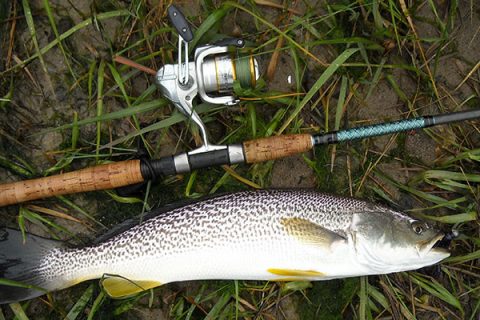
The hit was a familiar “thump,” different from that of a striped bass or bluefish. When I set the hook, the fish made a hard run down-tide, peeling line and testing my drag. Once I had the fish under control, I spied the purple hue of a tiderunner, and in that moment, I realized the weakfish were back.

The weakfish is a beautiful, hard-fighting gamefish that has carved a special place in the hearts of saltwater fishermen. Every spring, I actually overlook striped bass to focus my efforts on weakfish. After a few poor years, 2013 saw not only an increase in the number of weakfish caught in Cape May County, but an increase in the size of the weakfish as well. Captain Ray Szulczewski of Tide Runner Charters out of Cape May had his best year in a decade in 2013, catching numerous weakfish in the 25- to 28-inch range, with some topping 30 inches. He also had days where he caught more than 30 fish. Once again, South Jersey fishermen can catch tiderunner weakfish big enough to produce drag-screaming, heart-pounding runs.
Here is some information gleaned from generations of fishing experience in Cape May County that will put you in excellent position to catch the coveted weakfish this season.
Conditions
Water temperature is critical when hunting weaks. Weakfish bite best when the water temperature holds at or above 59 degrees for three days. They can be caught on bloodworms, shedder crabs and other natural baits at 55 degrees, but to effectively catch weakfish on artificial lures, the water must be warmer than 57 degrees. Once the water temperature rises above 75 degrees for three days, the weakfish will feed almost exclusively at night.


The tide has a major influence over the water temperature in an area. A bay with a water temperature reading of 42 degrees at high tide could be 62 degrees at low tide. By carrying an inexpensive water thermometer, jetty, surf and sodbank fishermen can seek out the best water temperatures for targeting weakfish.
During extended periods of heavy rainfall, weakfish will move out of the back bay areas. It can take up to a week of dry weather for them to return, but the fishing usually turns back on after three days.
Weakfish can be caught in relatively murky water, using the right lure colors, but if the water is too dirty, the fishing will be poor.
Weakfish bite best at first light. The first 45 minutes of daylight should never be missed, even if it does not coincide with the correct tide or moon phase for the spot you are fishing. Often, the first light bite will be the only weakfish bite of the day, but not always.
The best tide phase to fish is determined by the location and the time of year. Some spots will produce at or near low tide while others will produce best around high water. The weakfish bite best on larger tides brought on by the full and new moons (A good tide table will give you this information.) Two hours before and two hours after low or high tide are prime, especially when this tide phase is close to dawn or dusk.
Early and late in the season, water temperature will dictate the most productive tide. During the early spring, the end of the outgoing is best. In the late fall, the end of the incoming is best.
Wind direction is very important and is very spot-specific. An east wind can be red-hot in one area and create a dead zone in another.
Weakfish spawn in late spring and will not bite while spawning. This has caused a lot of frustration among fishermen, causing some to shift their focus to other species. However, after the spawn, the weakfish bite will heat back up.
Structure
Rock jetties, bridges, mussel beds, edges, pilings, marsh banks and temperature breaks can all hold weakfish, but where the structure is located will determine how well it will produce. The current, bottom type, salinity, water clarity and depth are all factors. Weakfish will take up residence on good structure for an entire season, so once you find a hotspot, it’s likely to produce time and time again.

Lighted docks and bridges will also attract weakfish. In some areas, these lights attract hundreds of them. Productive dock and bridge lights are easily found by watching for feeding weakfish. Make a quiet approach when you are scouting or fishing, so as not to spook the fish feeding in the lights. The eddies around the Delaware Bay lighthouses are the hottest spots for night fishing with lights.
Hot Spots In Cape May County
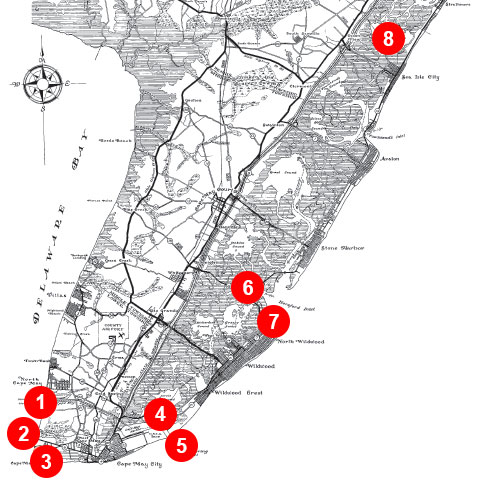
The jetty in Higbee Beach Wildlife Management Area (2) produces good numbers of beautiful weakfish. The best time to fish the jetty is during high tide. At the low tide, fish the beach from the jetty down to the Alexander Avenue jetty. This stretch of beach contains many weakfish hotspots within casting range. Walking the beach and casting is a good way seek them out.
The Cape May Ferry jetty (1) holds weakfish during high tide, but low tide also produces fish. Wind from the south, southeast, and east produce the best action at this jetty.
Many weakfish have been dragged off the jetties at Cape May Point (3); however, take caution when fishing these slick rocks. I have caught more weakfish from the beach in this area, often without even getting my feet wet. I cast alongside the jetties and work the beach between them. Low tide during a south or southeast wind is best for fishing Cape May Point. Just beware that at high tide, the jetties are underwater.
The beach from the Cape May Ocean Drive toll bridge to the beginning of the Cold Spring North Jetty (4) has given up a lot of beautiful weakfish, but you will need waders to fish this spot. It is only fishable during low tide, and fishes best on a south, southeast or southwest wind.
The Cold Spring North Jetty (5) has produced some big weakfish, some approaching state record size. It requires a mile-plus walk to access but it is an excellent spot. Weakfish are caught here during both tide phases. The best action coincides with south, southeast, west and northwest winds. To fish this jetty, cleats are mandatory equipment.
The Grassy Sound fishing pier (6), constructed from a former bridge, produces good numbers of weakfish and has excellent access. Weakfish are caught during both tide phases here during south, southeast, southwest and west blows.
The North Wildwood Seawall (7) holds excellent numbers of weakfish during both tide phases when the wind is blowing south, southeast, southwest or west.
Ludlum Bay (8) historically starts the season in Cape May County, with the first weakfish and summer flounder of the season being caught there. Fish first light in these back bays.
Brandywine Lighthouse attracts an excellent number of weakfish, including some big tiderunners. Calm winds and waters are crucial in this area as boat fishermen will need to cast to the rocks and current eddies surrounding the lighthouse.
Bait And Tackle
My preferred weakfish setup consists of a Penn Battle 2000 matched to a 6½-foot rod rated for ¼- to 1-ounce. I spool the reel with 10-pound PowerPro and tie an 18-inch 15-pound-test fluorocarbon leader directly to the braided line—no swivels or snaps.

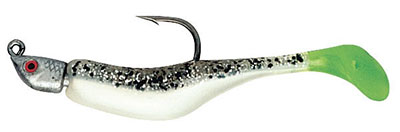
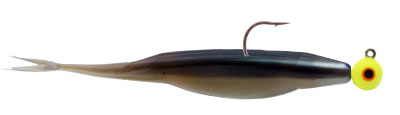

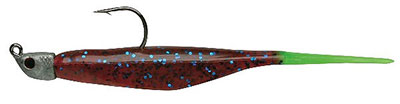

For lures, I favor 1/8- to 1/2-ounce white bucktails or soft plastics rigged on a 1/8- to 1-ounce round jighead. My favorite soft plastics are 5-inch Zoom Super Flukes, Fin-S Fish, Bass Assassin Sea Shad, Bass Assassin Saltwater Shad and the Culprit Rip Tide Mullet.
Do not make the common mistake of using only pink for weakfish. Keeping a variety of colors in your tackle bag is a must, as weakfish can be very color sensitive—even having different shades of the same color can make a difference. One early May, while fishing from the sod bank on Nummy Island, the importance of lure color while weakfishing was burned into my mind. My friend Ed had landed seven weakfish, while none of the other eight fishermen had caught one. Ed was the only fishermen using a hot pink lure. I was using bubblegum (a muted pink), casting to the same spot and using the same retrieve. Ed gave me one of his hot pink lures, and sure enough, on the first cast, I hooked up with a weakfish. Subsequent casts produced three more weaks. I have had the same experience while fishing the Convent Jetty on Cape May Point, when the only color the weakfish would hit one morning was black.

In the spring, shedder crab and bloodworms are the best baits for weakfish. Drifting the back bays with a Cape May Float Rig loaded with shedder crab or bloodworms is a super effective way to catch them. It is also an excellent way to find your own weakfish hot spot. In the fall, live-lined snapper blues can’t be beat.
Presentation
Regardless of what bait or lure you are using, if your presentation isn’t natural, you will not catch weakfish. Retrieving against the current makes for a poor presentation. Fish the lure or bait with the current to achieve the most natural presentation and get the most bites.
When targeting weakfish, use a slow, steady retrieve that allows your lure to sweep through the strike zone without getting hung up on the structure. Lifting and dropping or hopping a lure along the bottom will draw strikes when weakfish are schooled up and holding tight to the bottom, especially during slack tide. Jigging the rod tip and lifting the jig works well when fishing tight to structure or in deep holes during slack tide. Vertical jigging works best when weakfish are stacked up on sandy bottom during their fall ocean migration.
Always cast up-tide, even if it is only slightly. If you cannot hit the strike zone with an up-tide cast, consider changing your location. The best cast puts your lure or bait in position to ride the natural flow of the tide into the strike zone.
When you feel the hit, quickly and aggressively set the hook. Once the hook is set, it is imperative to keep the line tight. Set your drag a bit lighter than you would for stripers or bluefish to prevent pulling the hook from the soft-mouthed weakfish.
It is refreshing to know that lifetime friendships and father-son bonds will continue to be forged while targeting weakfish in Cape May County. Please be mindful of the weakfish bag and size limits, so we can enjoy these beautiful fish for years to come.
That was a great article. Thank you for your time writing it. Heading to West Wildwood this weekend. Am anxious to try your techniques.
Looking forward 2017 there isn’t much pressure on trout because of the Limet of 1 fish the betters Limet to high
What’s the approach for Weakfish in July / August? Or are they not likely to be caught in the summer. Sorry if this is a dumb question.
The write gave the answer in the article. You need colder temperatures and clean water. A high tide at night near bridge structure will hold fish. It needs to be clean water, so no rain and likely no moon tides.
Great article very informative thank you very much