

The author, Andy Nabreski, searches for clams with a rake in the winter of 2017.
Clams (quahogs) are abundant throughout the Northeast, and I believe they are the most versatile for cooking. Quahogs go by a few different names. A just barely-legal clam is often called a “littleneck.” A medium-size quahog is a “cherrystone,” and a big one is often called a “chowder” or simply a quahog.
How to Find Clams
Start by looking in bays and estuaries that get plenty of tidal flow. Clams live in a variety of conditions, including sand, mud, and even rocky areas, though I favor locations that feature more of a muddy/sandy bottom. Drive around to likely areas at low tide and seek out other clammers. I must warn you, however, not to intrude too closely on another clammer’s turf. Clammers tend to be a happy lot but can be very territorial.

Quahogs live anywhere from the high-tide line to depths of over 20 feet. They tend to congregate along the shorelines, so I like to look for them in areas from the low-tide mark out to about 4 feet deep (at low tide). Pay attention to the seafloor as you are looking. Once you start finding clams, take note of the bottom type, and look for other similar areas.
Tools & Tips to Gather Clams
- Clam Rake: There are a few different styles available, but KB White Company is my favorite.
- Float: An old inner tube will work if you’re on a tight budget.
- Neoprene Gloves: Keep your hands warm and help prevent blisters.
- Shellfish Gauge: You’ll need one of these gadgets to measure “keeper” clams. Tie on a loop of string and wear it around your neck.
- Shellfishing License: Don’t leave home without it.
- Waders: Neoprene is the way to go if you plan on clamming in the winter.
- Wire Basket: You’ll need something to put all of those tasty clams into.
You’ll need a clam (quahog) rake, a basket, and a gauge to measure them. Take the rake and start scraping the bottom. You want the teeth on the rake to penetrate at least an inch below the surface. (It’s kind of like raking leaves.) Clams don’t live very deep – they are just under the surface. When your metal rake hits one of the hard shells, there’s a distinct feeling and sound that, over time, you will instantly know is a quahog, and not a rock.


When you feel that “thump,” really start digging and try to get the teeth of the rake under the clam. Pull the rake toward you, flip it, give it a shake, and pull up a clam!
If you are averaging two ‘hogs per rake, you’re doing well. If it takes more than four rakes to get one quahog, start looking for another spot. Sometimes, moving 10 feet can be the difference between loading up quickly or going home with 10 clams. Once you find a good spot, don’t stray too far. Shellfish beds don’t regenerate quickly, so once a clammer clears out a particular location, it’ll be slim pickings until the following year. Be persistent, cover some ground, and you’ll find a sweet spot.

While raking for quahogs is perhaps the most productive technique, during the summer months you may witness “summer clammers” gathering ‘hogs using their hands and feet. Simply walk around a clam bed until you feel something solid underfoot, then start digging with your hands. With a bit of luck, you’ll come up with a clam; but beware of ornery crabs, or, worse, hunks of broken glass.
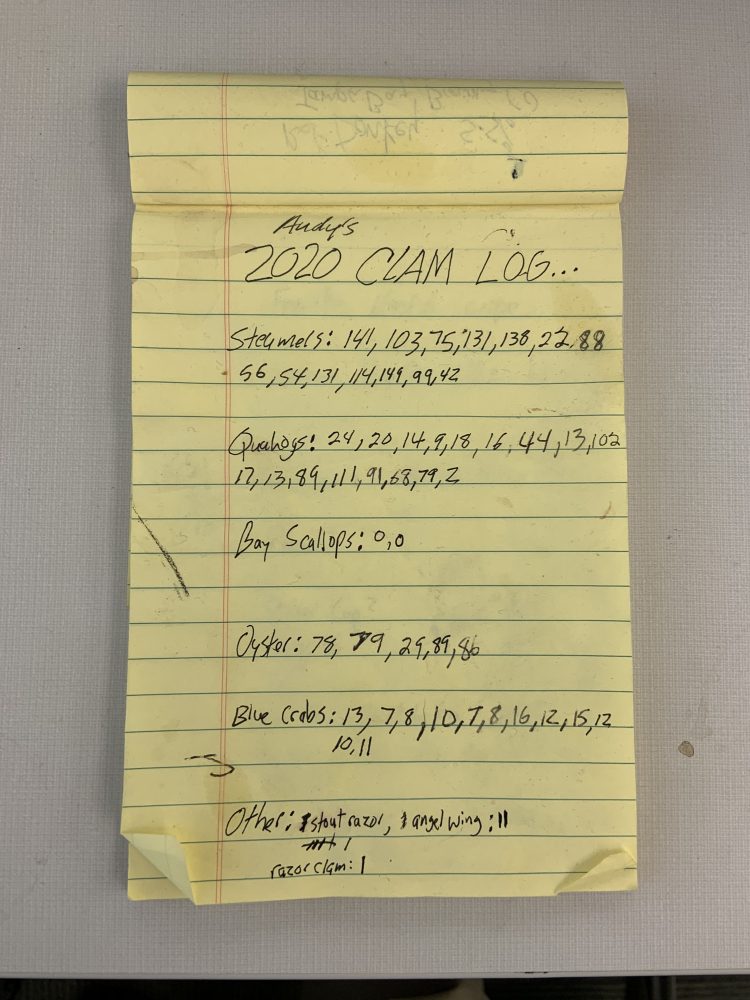
Andy,
I love to rake for clams
On a warm sunny day
The water swirling around my feet
The feeling of the rake
Reach, reach
Dig, dig
Shake the basket
Every single time
It’s like Christmas
Great info here Andy. Thanks for sharing. I never used the plunger but I have been told once you find a steamer you would then plunge the hole as more could/ should be underneath?
Ken, yes, the smaller steamers will be on top, the big dogs live deeper, usually about 8 to 10 inches down. Check out this informative video we filmed last year on the toilet plunger technique: https://www.youtube.com/watch?v=g424vGcDOiY
I have been using an actual toilet plunger for years. Then I pick em off the bottom with my hand. Plus it cleans the brownies off the plunger.
I can’t wait for spring so I can get out there and dig some schoolie clams!
Moving to Prudence Island RI so was looking on the internet for places to scallop and clam. Came across your video and enjoyed it! The plunger was ingenious. I thought, got to send this guy a dip net video from Alaska. This is how we fish for numbers up here and knew if you weren’t familiar with dip netting…this would return the efforts and smile. Enjoy! Unfortunately, you have to be a resident to fish this way (and it is Daytona Beach Spring Break with fish) but if you are ever planning to be in the state…this is not to be missed…even if only to view. Thanks again! If the following link doesn’t work then just google dip netting the Kenai (the video you want to watch is from July 25th, 2017 and is 3 minutes 42 seconds long…). There are plenty videos out there on dip netting in Alaska but this one rocks. The PCV tubing is an insane idea….I’ve only used the long nets. Enjoy! https://www.google.com/url?sa=t&rct=j&q=&esrc=s&source=web&cd=&ved=2ahUKEwjw0qzymL7yAhV3JTQIHWC1Ao0QtwJ6BAgGEAM&url=https%3A%2F%2Fwww.youtube.com%2Fwatch%3Fv%3DAjfkmabc0uw&usg=AOvVaw3Usu_K1rki4eivjrENpqTd If that doesn’t work google dip nets
Where can I dig clams in tx?
Love Clam digging. In WASHINGTON STATE
what do you do with the clams shells I would love to have them if possible thanks in advance