

Explore a river teeming with pike and walleye on a fly-in adventure in the wilderness of Northwest Ontario.
After months of planning, weeks of anticipation, and a full day of travel, I was finally in my happy place: straddling the bench seat in the stern of a 14-foot aluminum boat, my left hand on the throttle of a 9.9 horsepower outboard, and my right hand holding a laminated map of a lake I’d never fished before.

Glancing back and forth between the map and the scenery, I started to pick out points, bays and other landmarks, matching them to areas on the map and tracking our progress as my father and I made our way toward an area that camp owner Eddie “North” Guergis had pointed out as a “good spot for pike” during a quick debriefing upon our arrival. But, before we reached our planned destination, a curved shoreline rimmed with pencil reeds caught my attention, and I could see my father in the bow looking in the same direction. I made a wide right turn, eased the throttle back toward idle, and watched over the side of the boat as the tops of a cabbage-weed bed appeared. My father turned back toward me and stated the obvious.
“Looks good.”

The freedom of being able to make a cast anywhere that “looks good” is one of the many reasons why outpost-style, fly-in fishing trips to the Canadian wilderness have become a tradition for our group of fishermen. There’s also the adventure that comes with fishing a new body of water and the challenge of figuring out how to fish it. That’s why last year our group of 10 decided not to return to one of the many fantastic lakes we’ve fished in the past, and instead fly in to the main lodge of Eddie North’s Attawapiskat River Adventures in Northwest Ontario.

Eddie “North” has a slick nickname and a website done up in Indiana Jones-style font, but the man himself is a young grandfather who’s exceedingly calm and laid-back, even by Canadian standards. Unlike some of the cantankerous caretakers we’ve dealt with on past trips, Eddie walks his camp with the slight, permanent grin of a man who is living the dream and wants to let you in on the secret. His operation includes recently added outpost camps on three different lakes along with a main lodge on Beteau Lake. However, unlike most fly-in Canadian fishing lodges, which offer American-plan lodging that includes meals and guides, Eddie runs his main lodge like an outpost. He is on site to assist as needed, but guests are responsible for bringing in their own groceries and doing their own cooking.
The arrangement is convenient for groups that like to make their own fishing schedule without being tied down to set meal times. It works especially well for our group, as one of our members, Mark Hutchinson, is the owner and head chef of a fine-dining restaurant, and another, Dr. Bruce Platt, is a cardiologist who likes to supplement our otherwise modest meal plan with strip steaks, frozen lobster tails, and several pounds of butter.
Eddie’s outpost-style lodging also keeps the trip affordable for groups who care more about having access to great fishing than having luxuries like indoor toilets and mosquito-free lodging.

Beteau Lake is not one of the typical clear, rocky Canadian Shield lakes that we’d become used to fishing on fly-in trips. It’s a widening of the 465-mile-long Attawapiskat River, which flows east across Northwest Ontario and empties into James Bay. Instead of exposed-bedrock shelves and drop-offs, Beteau is primarily broad sand flats and muddy bays. Each spring, it rises and floods into the brushy shorelines and many square miles of marshy bogs, and by late summer it drops several feet and withdraws toward its main channel.
The first day of fishing was slow, as it often is when trying to figure out a new body of water. My father and I focused on pike, casting spoons and spinnerbaits in weedy bays. We enjoyed some good action, landing about a dozen pike, but didn’t manage a fish over 30 inches. We also caught a few aggressive walleye that, remarkably, hit our pike spoons in the shallow weeds.

Comparing notes back at camp that night over a meal of golden-fried fish and potatoes, we found that the lake had been a challenge but everyone had caught fish, including a trophy 26-inch walleye and a 41-inch northern pike. Some patterns also began to emerge; what seemed to matter more than finding structure, deep holes, or weed beds was locating areas that had good current. Spots with moving water, including the rapids in the river flowing out of the lake, had given up the biggest walleye, and weedy areas located near narrows that constricted the flow of water through the lake had given up the biggest pike.
The next day, my father and I woke early and headed straight to the far end of the lake, where the Attawapiskat flows past a few weedy bays and around a large island before entering the main body of the lake. Drifting with the current in about 10 feet of water, we started to consistently pick up walleye on jigs. Later in the day, my dad also added our first big pike of the trip, a 39-incher that hit a Johnson Silver Minnow just seconds after it splashed down next to a shoreline of downed trees.
Back at the camp that night, Eddie hatched a plan for the next day that he promised would provide some real adventure. His personal craft is an inflatable boat powered by a jet-drive outboard that allows him to navigate through shallow rapids and reach virgin waters miles upriver. If the water levels were high enough, we could follow behind him and pick our way upriver to a spot where he absolutely guaranteed we’d connect with a big pike.

The next morning, we loaded each boat with extra food, drinks, and two full gas tanks. We formed a caravan, following single-file as Eddie picked his way up through rapids where slick water bulged over massive boulders and crashed into roaring waves. We white-knuckled it through three major sets of rapids without doing fatal damage to any of the outboards, which thankfully were equipped with metal prop guards. Finally, after a 45-minute run through a long stretch of gorgeous north woods scenery, we arrived at a massive pool at the base of an impassible waterfall.
Eddie had predicted that there would be at least one big pike hanging at the base of the falls and, sure enough, Dan DeRose, who was fishing in Eddie’s boat, set into a pike of about 40 inches within minutes of our arrival. After a short photo shoot, we spent the rest of the day working back downriver, tossing spoons and swimbaits along the shorelines and regularly hooking pike and walleye.

The fishing seemed to improve with each passing day as we narrowed down the productive water, identified some hotspots, and got comfortable with techniques that worked on Beteau’s fish. On the afternoon of the last day, my father and I landed over two-dozen walleyes by focusing on a couple of drifts only a few hundred yards apart and switching out small jigs for larger lures. My most consistent producer for walleye was a homemade inline spinner tipped with a 4-inch swimbait. I expected to use the flashy bait for pike in the weeds, but instead it produced my biggest walleye when slow-rolled along the bottom.

Overall, the quality of the fishing was among the best we’ve had in 30 years of Canadian fishing trips. The pike fishing didn’t quite meet our lofty expectations (or Eddie’s), but we did catch several fish over 36 inches, and one angler achieved a personal goal by landing a 41-incher. The walleye fishing was far and away the best we’ve experienced in terms of numbers of quality fish, including a bunch from 22 to 26 inches.
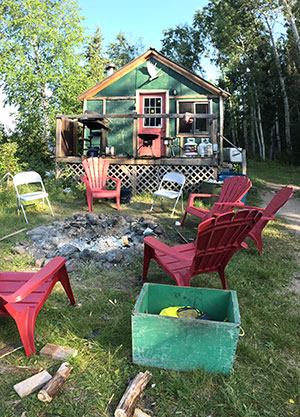
On the last night, Eddie joined us in the lodge to partake in our traditional lobster and steak feast, and to assist us in our attempts to empty the full bar we’d imported. He was a great outfitter and host, and it’s obvious why he has a loyal following of hardcore fishermen as repeat guests. Eddie opened the camp at Beteau in 2010, realizing a dream he’s held since his first trip into the Ontario wilderness at the age of 12. Reconstructing the old, neglected camp is a work in progress, but it’s shaping up to be exactly what Eddie had envisioned—a rustic, yet comfortable camp that is first and foremost about outstanding fishing and hunting. He could probably make more money by adding amenities and raising his rates, but that’s not his goal—it’s to share the remarkable piece of untouched wilderness that is so special to him.
Less than six months later, the group emails have begun again as we try to come to a decision on where our next trip will take us while reflecting on our Attawapiskat adventure. For every fish tale, there’s a good laugh about the ruthless mosquitoes that made sleeping miserable and the foul outhouses (made all the worse by the plague of mosquitoes). After many years of rustic camps and wilderness outposts, perhaps we’ve gotten soft, or maybe it’s just a reflection of our group starting to skew toward retirement age, but we’re leaning toward our next adventure being something truly novel for us—a splurge on an American-plan lodge that offers the luxury of indoor plumbing. As long as it gets me back to my happy place in the Canadian wilderness, I’ll be there.
Thanks for a fabulous article about north woods angling. What month of the year was your trip? If you main goal was high numbers of fish (rather than lunker size fish) what would be the best time for a trip? Are smallmouth bass present that far north? When do the black flies and mosquitoes subside in numbers? How late in the autumn does Eddie North provide angler services?
Tight lines…Otto
Thanks Otto! Our trip was at the end of June. If you’re looking for numbers of fish, I think the earlier the better – mid-June ideally – but you can contact Eddie directly and he’d be happy to give you advice. He also has some other outpost cabins that are even more productive for numbers of fish. Black flies weren’t a problem, but I’m pretty sure mosquitoes are always around. The good thing is they never bothered us on the open water – only on shore. No smallmouth bass that far north, only pike and walleye.